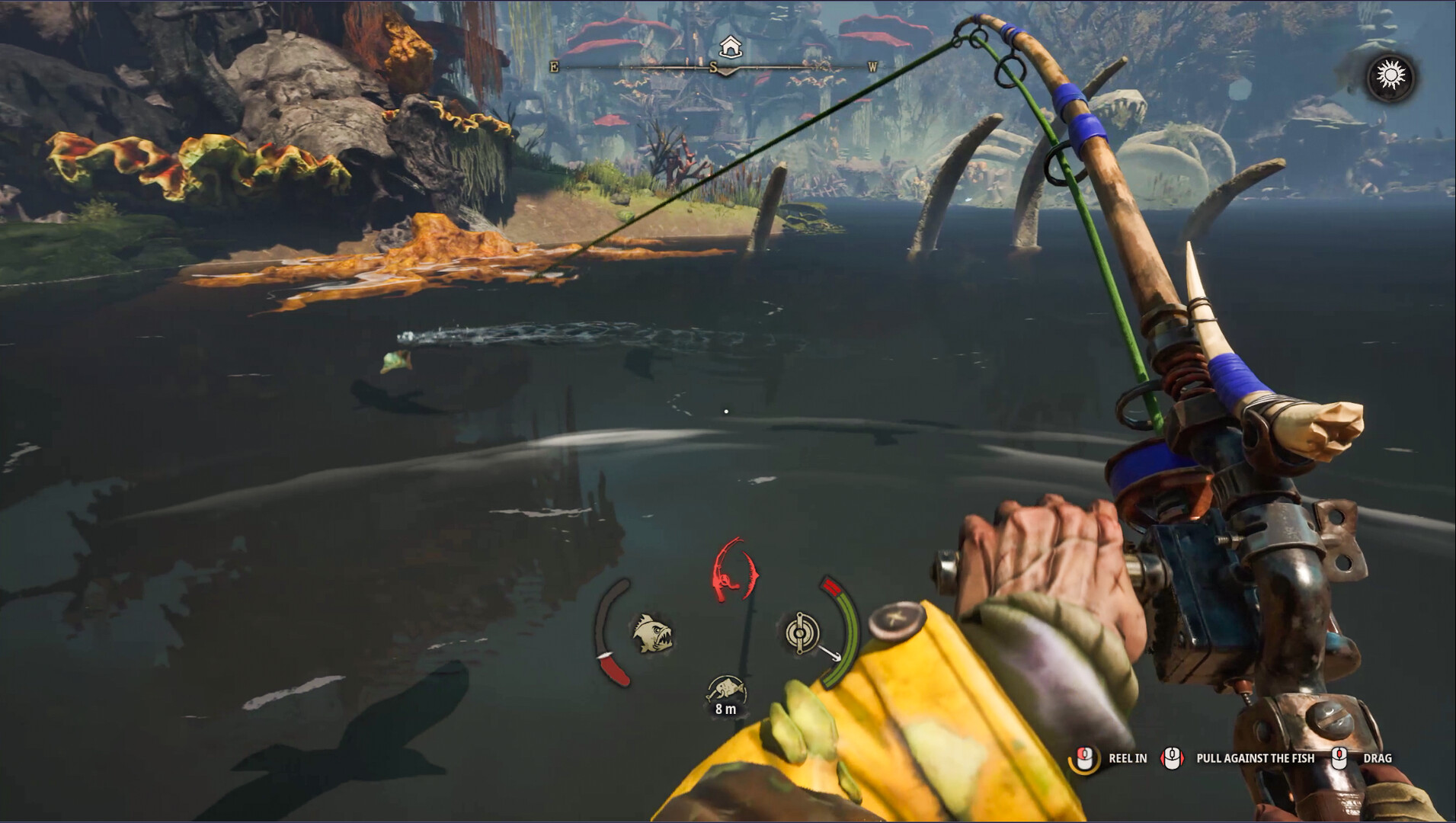
Bait in DREADMOOR is assembled at the workbench from gathered components, not bought off a shelf. The three behaviours are passive bait, drag bait and night bait — match the assembly to whatever the surface is telling you, not to a species list.
On this page
Workbench assembly
The recipe list at the workbench shows the missing ingredient directly when a recipe is partially set up. Plan around that gap:
- Open the recipe and place the components you already have on the bench.
- Note the missing ingredient the bench highlights.
- Adjust your gathering route to pick that ingredient up before the next cast.
Baits split into three behaviours:
- Passive bait — waits for a bite; built from simple organic scraps; used at the standard surface marks.
- Drag bait — pulled through the water to entice aggressive fish; used at ripple marks.
- Night bait — used in dark waters where stranger varieties surface.
Matching bait to the encounter
Match the bait to whatever the surface is telling you, not to a species list:
- Fish-head icon, no ripple → passive bait, standard rod loop.
- Ripple trail without an icon → drag bait, work the line through the water.
- Visible gulls only at dusk or later → night bait, reinforced tackle ready.
Deeper-water species need rarer components in the bait, not just a stronger rod. Heavier prey also responds better to reinforced line setups because they cut the snap risk during long runs. Use the stronger tackle on any cast where the energy bar is draining faster than you can pause-reel. When a rare species is what you are after, see the DREADMOOR rare fish locations guide for the named zones that hold those rosters.
Match depth and species
Use lighter passive baits in the starting lagoon and the named zones close to it. The rarer fish in deeper waters, including night-only varieties, only take specialised bait built from rarer components. If a recipe is missing an ingredient you have not gathered, the workbench will show what to find next — chase that ingredient before the next expedition.